Scripture: Habakkuk 3:17–19; Psalm 100:4
My daughters and I were discussing the lyrics of a contemporary Christian song. It was definitely Christian, but I questioned whether it was actually worship. The song celebrated forgiveness, freedom, and a transformed life through what Jesus had done for the singer. All wonderful truths! But something gave me pause. While the song acknowledged God, its emphasis seemed to be more on the person receiving the blessing than on the God who provided it.
My daughters challenged my thinking. After all, isn’t celebrating what God has done a legitimate expression of worship? And doesn’t worship look different from one person to another?
Certainly, worship can take different forms. Some worship with uplifted hands, others with bowed heads. Some are exuberant while others are quiet and contemplative. The expression may differ, but the Object of worship remains the same.
Perhaps we’re confusing thanksgiving, praise, and worship. Though closely related, they are not necessarily the same thing.
Thanksgiving expresses gratitude for what God has done. Praise celebrates His mighty works, His goodness, and His faithfulness. But worship goes deeper. Worship celebrates who God is—His holiness, righteousness, majesty, eternality, sovereignty, and greatness—independent of what He has done for us or what we are presently experiencing.
We thank God for His blessings. We praise Him for His mighty works. But we worship Him because He is God!
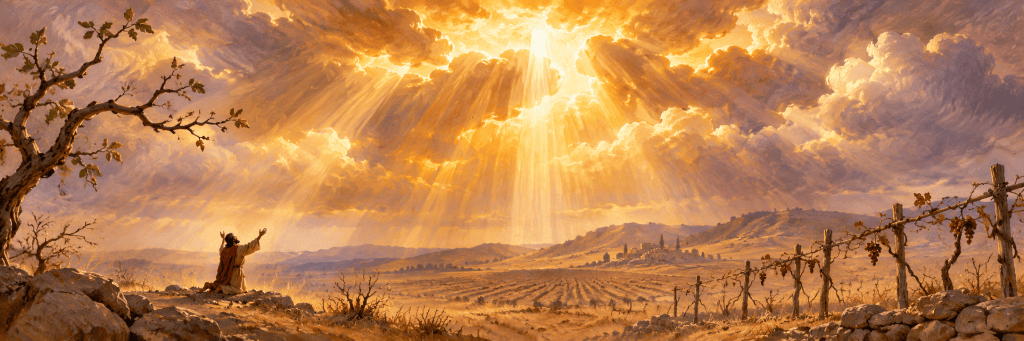
Consider the prophet Habakkuk. He describes a situation in which everything has gone wrong. The fig tree doesn’t blossom, the vines produce no fruit, the fields yield no food, and the flocks and herds disappear. There is nothing in his circumstances to celebrate. Yet he declares:
“Yet I will rejoice in the LORD, I will joy in the God of my salvation” (Habakkuk 3:18).
Notice where Habakkuk directs his attention. Not toward what God has done for him, not toward what he hopes God will do, and certainly not toward the circumstances surrounding him. His attention is fixed upon God Himself.
His circumstances have changed, but God hasn’t. The fields may be empty, but God is still faithful. His resources may be exhausted, but God’s greatness remains undiminished.
That’s worship!
Worship isn’t dependent upon a favorable diagnosis, a healthy bank account, a restored relationship, or an answered prayer. Those things may give us reasons for thanksgiving, but God’s worthiness never depends upon them.
Some Christian songs celebrate the believer’s experience. Others celebrate the greatness of God. Both may be appropriate, but we should recognize the distinction. A song can be Christian, encouraging, emotionally moving, and filled with biblical truth without necessarily directing our attention away from ourselves and toward the majesty of God.
And that’s the concern behind my original question. Are we celebrating what God has done for us, or are we worshiping God for who He is?
Worship may stir our emotions, strengthen our faith, and fill our hearts with joy. But those are not its primary purposes. Worship isn’t fundamentally about how God makes me feel. It is about acknowledging who God is.
Perhaps the most important question we can ask when we gather for worship isn’t, “Did I enjoy the music?” or even, “Was I blessed?”
It’s this: “Was God honored?”
Habakkuk reminds us that when everything else disappears, God remains. And when every earthly reason for celebration has vanished, He is still worthy of worship.
Thanksgiving celebrates His blessings. Praise celebrates His works. Worship celebrates His worth.
And His worth never changes.
Worship does not require God to change my circumstances. Worship recognizes that my circumstances cannot change God.


Leave a Reply