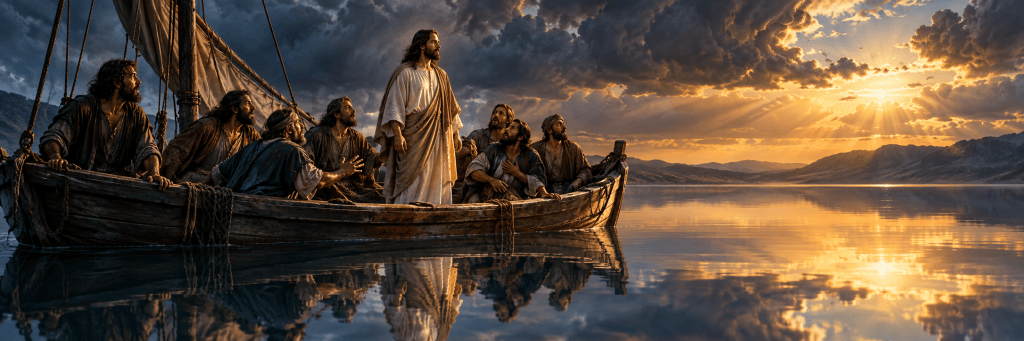
Mark 4:35–41; Luke 8:22–25
Mark tells us that Jesus “rebuked the wind, and said to the sea, ‘Peace, be still!’” (Mark 4:39). Luke says that Jesus “rebuked the wind and the raging of the water” (Luke 8:24). Taken together, the two accounts make an important point: Jesus exercised authority over both the cause of the storm and the effect of the storm.
The raging water was the result of the great windstorm. Jesus rebuked both. Mark tells us what He said to the sea, but neither Gospel tells us what He said to the wind. We are simply informed that He spoke, and both wind and water obeyed Him.
Had Jesus merely stopped the wind, the sea would have eventually grown calm, but that is not what happened. Jesus stopped the wind, and He stilled the sea immediately. He exercised authority over what was causing the storm (the wind) and over what the storm had caused (the waves). He did not merely stop the cause of the disturbance; He stopped the disturbance the cause had produced.
That helps us understand why the disciples reacted as they did. These were seasoned fishermen. They knew what happened when the wind stopped blowing. They knew that waves did not ordinarily disappear in an instant. Yet when Jesus spoke, both the wind and the raging water became still and that immediately.
The sudden calm produced great fear in them. They asked, “Who can this be, that even the wind and the sea obey Him?” The miracle forced them to confront something greater than the storm itself. They were beginning to understand that the Man sleeping in the stern of the boat possessed authority over forces no human being could control.
There is light for us here. Jesus is Lord over the cause and over what it causes.
The disciples were left asking the question, “Who can this be, that even the wind and the sea obey Him?”
Mark invites us into the story and the question: “Who can this be?”


Leave a comment