Hezekiah was a godly man with an ungodly father and an ungodly son.
His father Ahaz led Judah deeply into idolatry, but Hezekiah chose a different path. Scripture says, “He did what was right in the sight of the LORD” (2 Kings 18:3). Yet Hezekiah’s son Manasseh eventually became one of Judah’s most wicked kings (2 Kings 21:1–9).
There is an important truth here for parents carrying the pain of a wayward child: godliness is not hereditary.
A godly father can have an ungodly son, just as an ungodly father can have a godly son. Parents have tremendous influence, and we should never minimize our responsibility to teach, model, correct, pray, and point our children toward Christ. But influence is not control. Eventually, every child must make choices of his or her own.
Even Jesus experienced the grief of betrayal from someone who had walked closely with Him. Judas heard the same teaching, witnessed the same miracles, and lived in the presence of the same perfect Teacher as the other disciples—yet Judas chose another way. His betrayal was not evidence that Jesus had failed him.
Parents of prodigals often torment themselves with questions: Where did I go wrong? What should I have done differently? How could this happen after everything we taught them? There may be things to learn from the past, and where we have failed, humility allows us to acknowledge it. But a child’s rebellion is not necessarily proof of a parent’s failure.
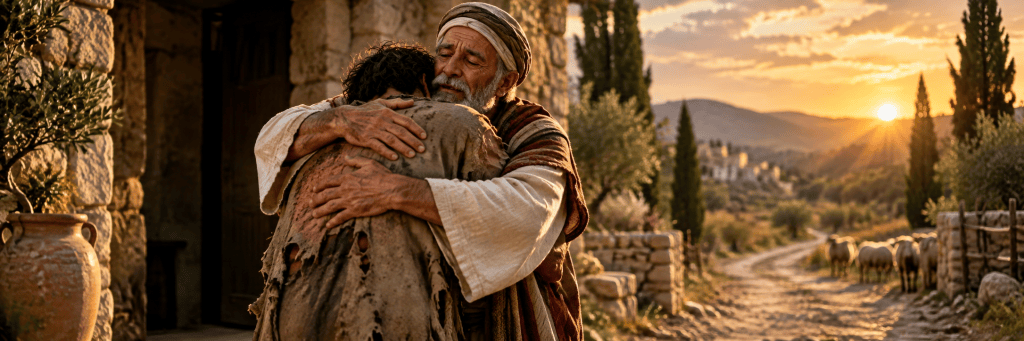
Remember the father in Jesus’ story of the prodigal son (Luke 15:11–24). The son’s departure did not make the father cease being a good father. The father did not follow him into the far country, nor could he make the decisions for him. He remained who he was, kept the door open, and was ready to receive his son when he came home.
If you have a prodigal, do not confuse their present choices with your final verdict as a parent. Love them. Pray for them. Keep pointing toward home. Examine yourself where necessary, but do not carry guilt that belongs to someone else’s choices.
And remember something else about Manasseh: his story did not end with his rebellion. After years of terrible wickedness, he humbled himself, prayed, and turned toward the God of his father (2 Chronicles 33:10–13).
The child who is far from God today may not be far from God forever.
Prodigals have choices to make, parents have prayers to pray, and God still has chapters to write. ©
Credit: Thank you Jane McGough Brown for the thought that sparked this devotional.


Leave a comment